One day, the Northwest Detention Center will be shut down
The Tacoma prison camp is a grim place, situated between a maze of railroad tracks and surrounded by razor wire. It looks exactly like what it is: a concentration camp where 1,500 people are held, many indefinitely.

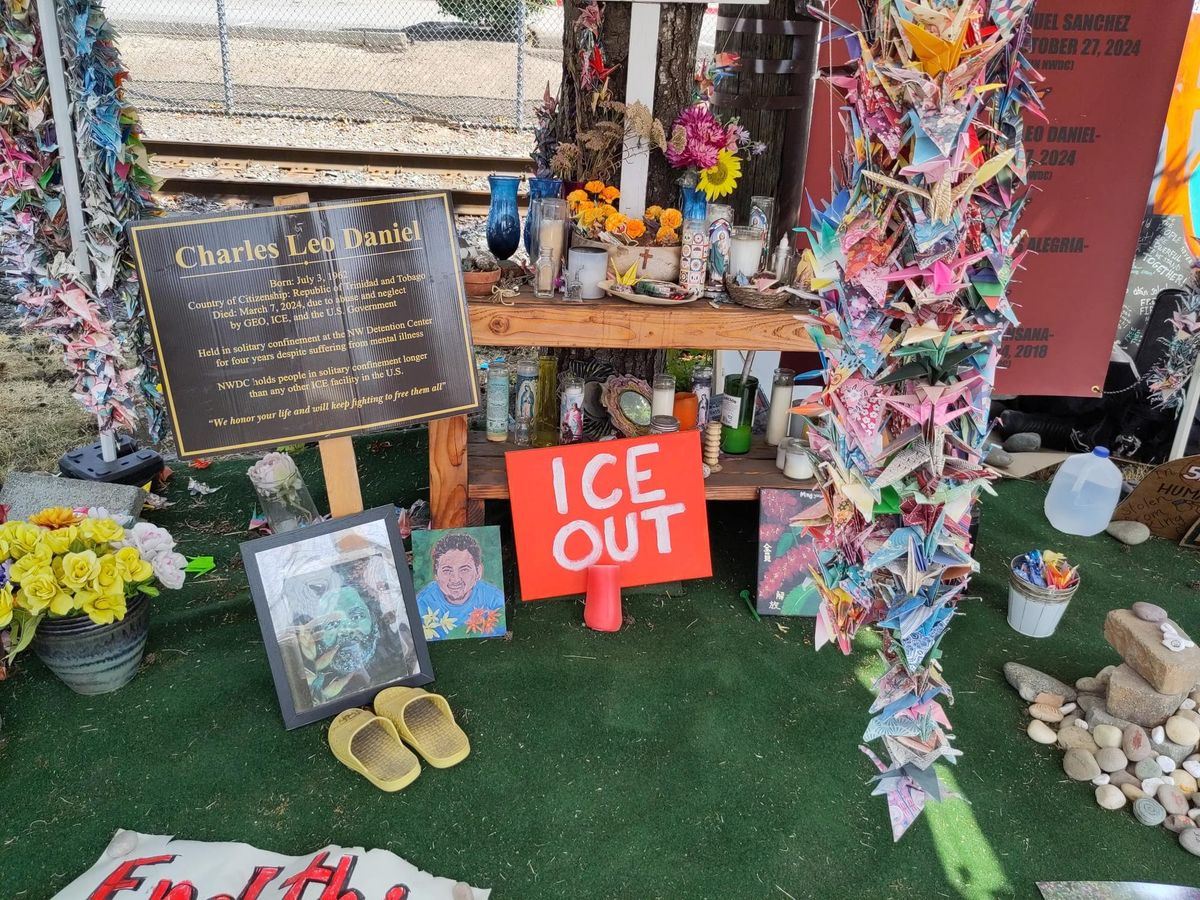
I've written about the Northwest Detention Center in Tacoma for many years as both a journalist and activist – but I'd never seen it in person until last weekend.
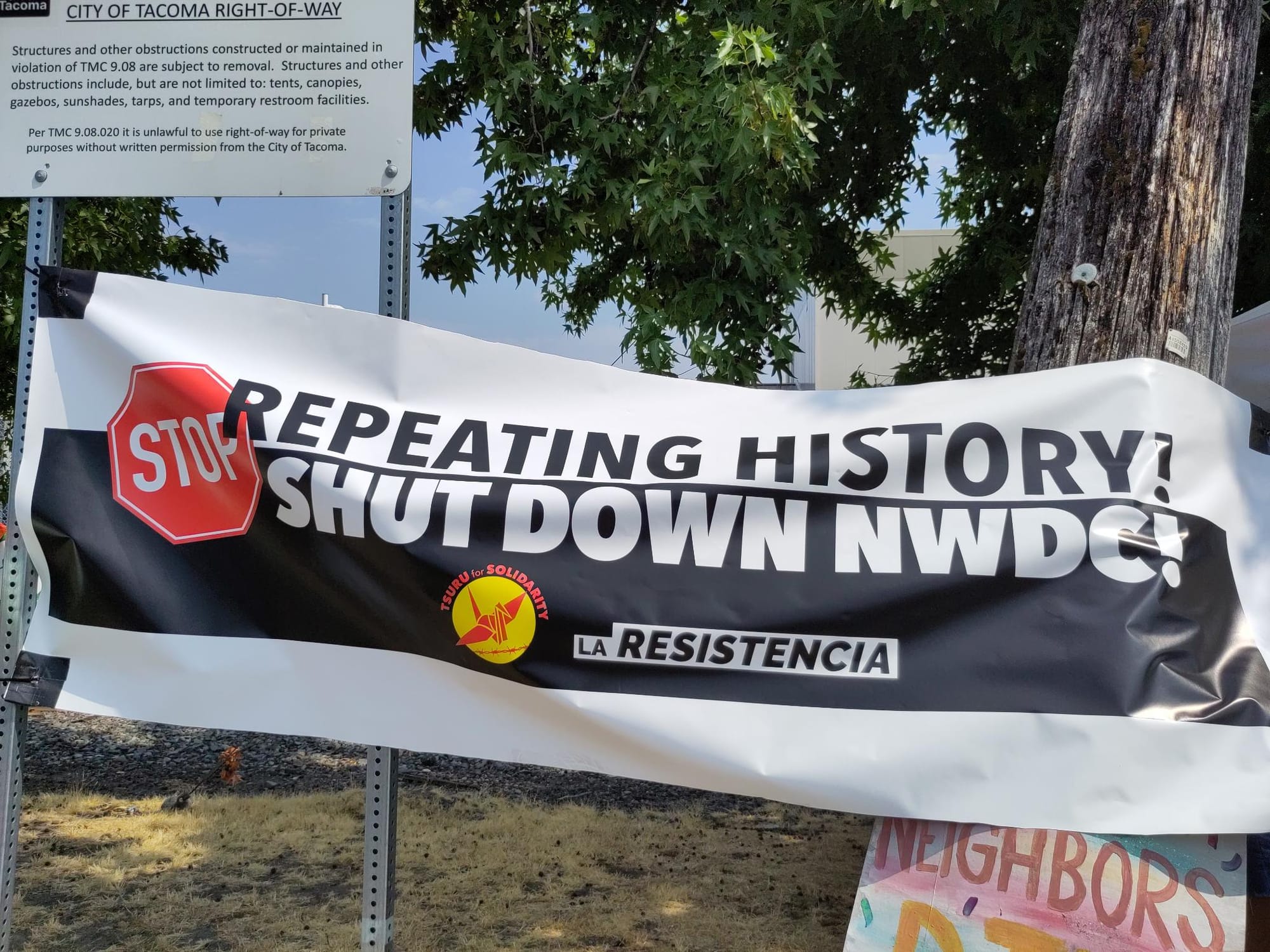
I went to join a protest and vigil organized by La Resistencia, the immigrant-led organization that has been fighting tirelessly since 2014 to shut down the immigration prison and to stop deportation flights out of Boeing Field. Also participating in Saturday's vigil was Tsuru for Solidarity, a national group of Japanese Americans and World War 2 US internment camp survivors who peacefully oppose ICE concentration camps across the US.
And let's be clear: these are concentration camps – places where large numbers of people from a particular ethnic group or class of people are detained under armed guard, often without formal charges. ICE's campaign of mass deportation has nothing to do with arresting violent criminals – the Cato Institute notes that 73% of people detained by ICE have no criminal records, and most of the remainder have minor violations. This is ethnic cleansing – an effort to remove brown people without documentation from the US. These are people who were tacitly allowed into the US to meet employment shortages and then went on to built community, create families, and become productive members of society. And now they live in a climate of fear and uncertainty.
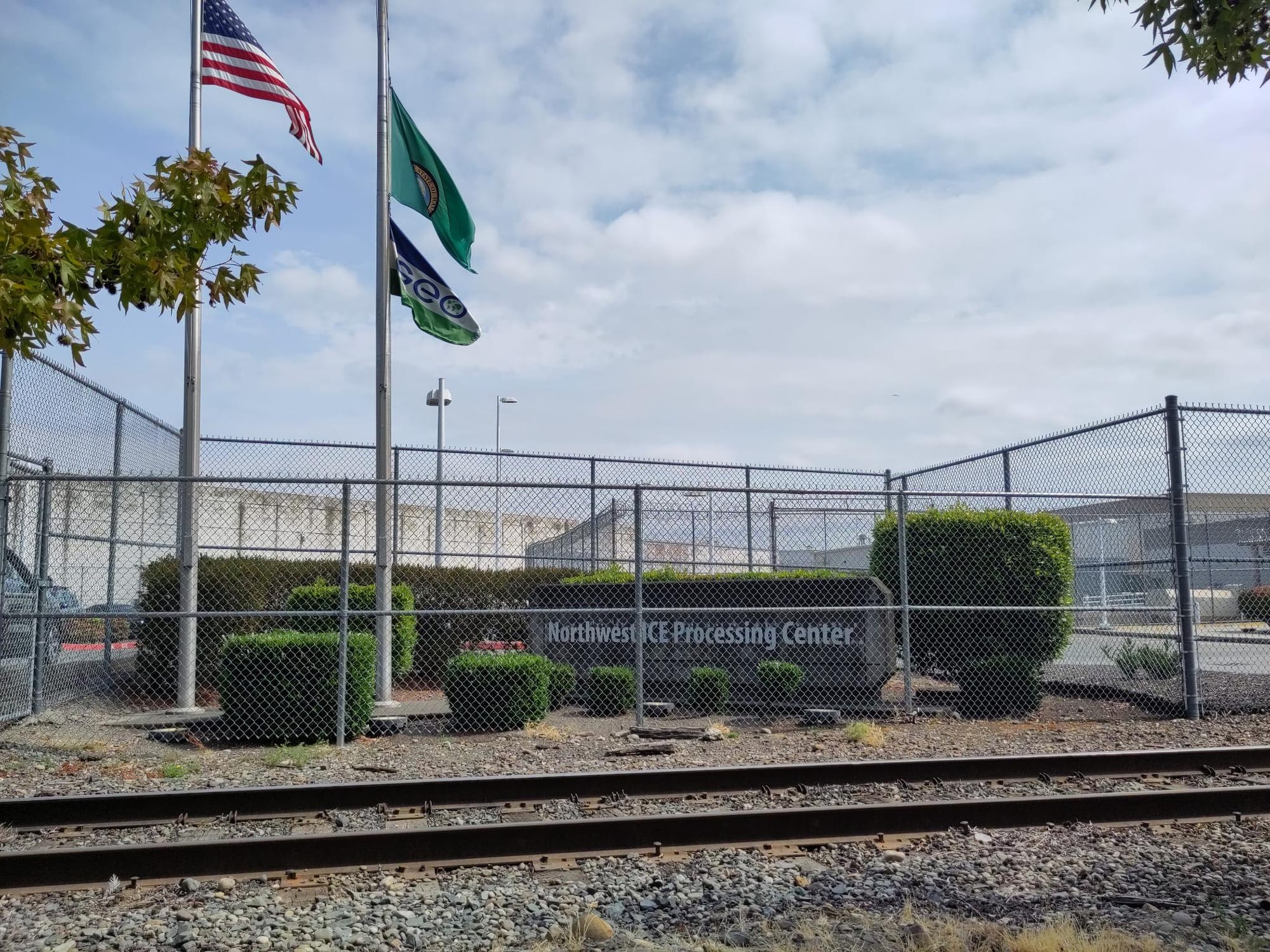
The Tacoma prison camp is a grim place, situated between a maze of railroad tracks and surrounded by razor wire. It looks exactly like what it is: a concentration camp where 1,500 people are held, many indefinitely. This works to the advantage of GEO Group, the private contractor that owns the prison camp, and which earns profits for every day an immigrant is held here.
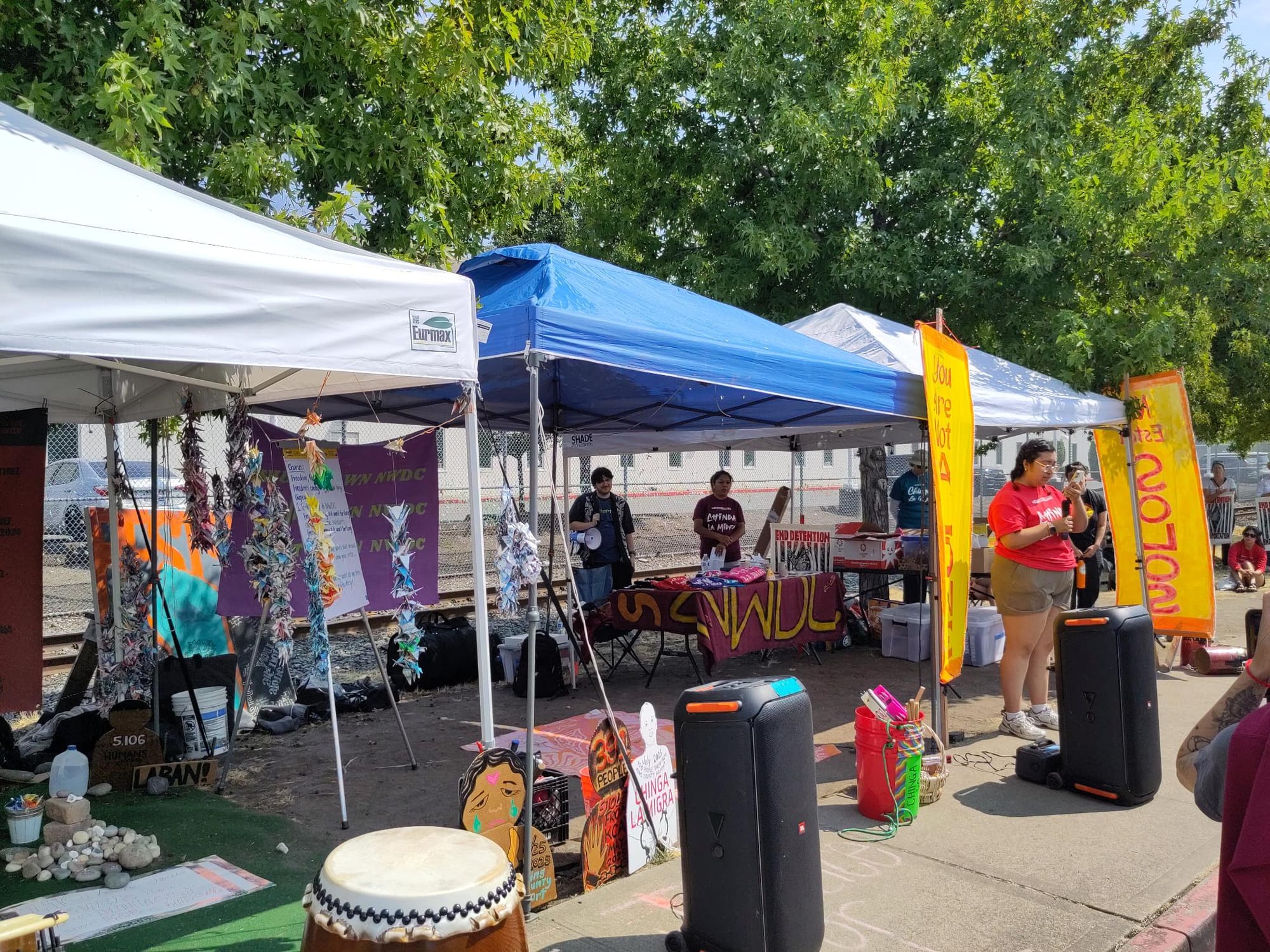
At the protest and vigil on Saturday, organizers with La Resistencia spoke passionately about the inhumane conditions at the prison, and about the terrible impact ICE raids are having on immigrant communities.
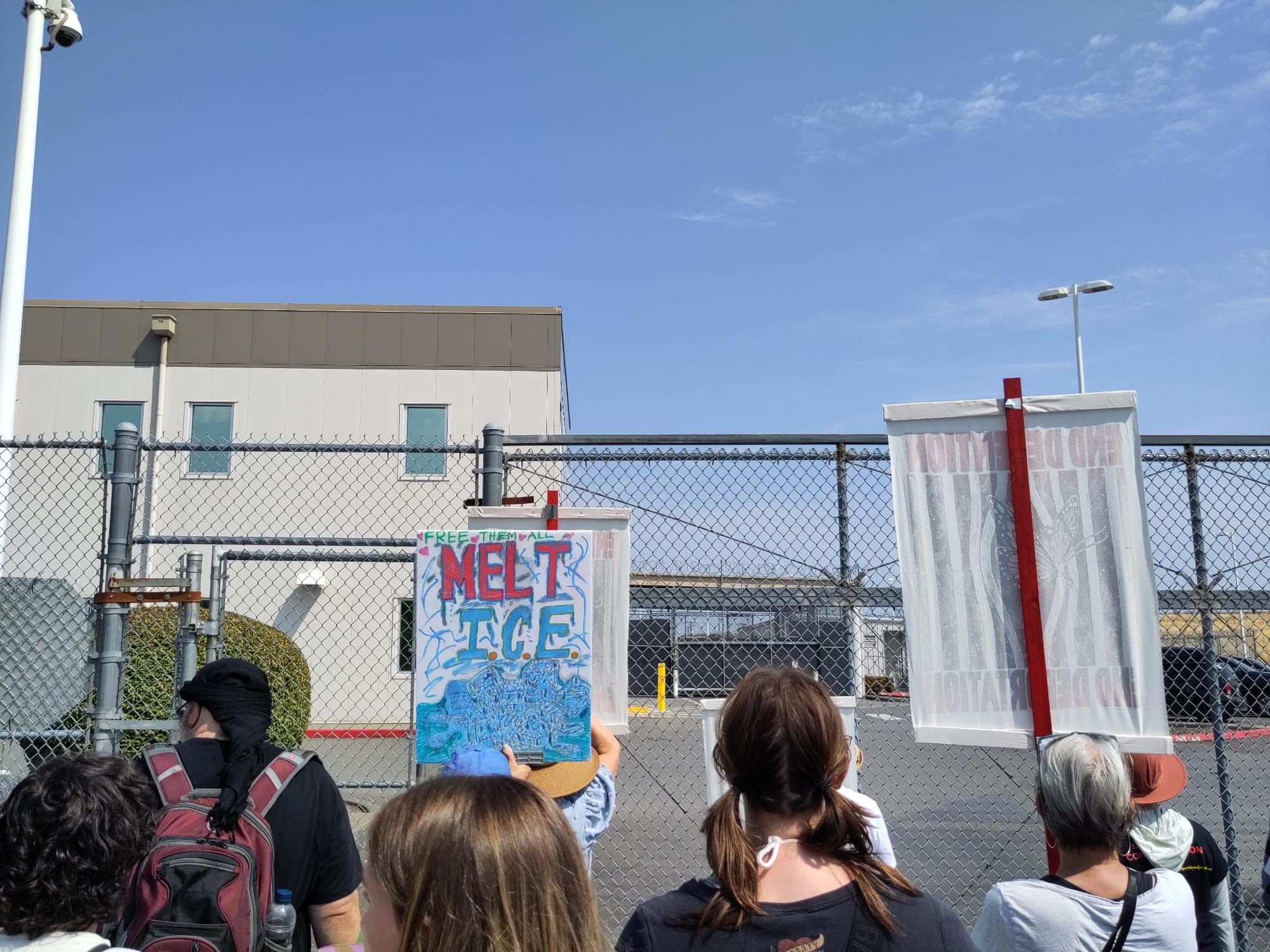
After speeches and songs, the protesters – perhaps about one hundred of us – walked in silence to the prison gate, led by a member of Tsuru for Solidarity occasionally striking a meditation bell. After standing in quiet witness of this terrible place, we chanted "No están solos." (You are not alone.)
A detainee who was on the hunger strike spoke by video call to members of the vigil, describing the awful conditions there, and the fact that guards had ended weekend visitations by family members because two congressional representatives, Emily Randall and Maxine Dexter, paid an unannounced visit to try to see conditions within the camp for themselves.
The hunger strike by 140 detainees has ended, according to reporting by Guy Oron today at the Stranger. According to La Resistencia, GEO Group agreed to increase food portion size and regularity of meals in return for an end to the strike. Detainees have reported again and again that the facility serves unsanitary and sometimes raw food, refuses to provide necessary medicines, as well as there being reported sexual assaults by guards. Washington state heath department officials are in a protracted court battle to get access to inspect the site, and in fact the feds may purchase the camp from GEO in order to avoid following state regulations.
One thing I heard from volunteers on the ground and from La Resistencia – GEO and ICE don't hesitate to retaliate against detainees for protest actions occurring outside the facility. This is a disgraceful and cruel fact, and it's why this camp needs to be shut down. It's also why protesters from outside the immigrant community need to listen to and work with immigrant-led organizers who are in contact with and working to improve conditions for those behind the barbed wire. We don't want to make things worse for them as we work to end their detainment.
Later in the vigil, an organizer named Guadalupe talked about La Resistencia's longtime work monitoring deportation flights out of Boeing Field, and how ICE consistently violates safety regulations there by doing "hot fueling" of planes with passengers on board who are in shackles – a dangerous violation of King County airport regulations.
After speeches and songs, the protesters – about one hundred of us – walked in silence to the prison gate, led by a member of Tsuru for Solidarity occasionally striking a meditation bell. After standing in quiet witness of this horrible place, we chanted "No están solos." (You are not alone.)
Now more than ever we need to pressure our leaders to abolish ICE, close these camps, and end deportation flights. An independent Cascadia would ensure this camp is torn down brick by brick.
 Andrew Engelson
In the short term, La Resistencia is ramping up a campaign to pressure King County to enforce its rules on ICE flights out of Boeing Field. Guadalupe, the organizer with La Resistencia, said that "one of our new approaches in our campaign to improve safety conditions and rule enforcement at King County Airport and eventually get ICE out, as we did in 2019, has been to begin directly pressuring the county after years of back-and-forth with the airport and FBOs led to little results."
"Additionally, the county has made it its stance that it will “encourage” its airport contractors to follow the rules rather than enforcing punishments against them," Guadalupe said. "This is unacceptable. If you find this outrageous like we do, please join us."
Mark your calendars: La Resistencia will be encouraging people to comment on enforcement of King County airport rules for ICE flights at 1:30 pm, Tues August 25 during a general hearing in King County council chambers at 516 3rd Avenue, Room 1001 (10th Floor) in Seattle. To provide in-person public comment, take the elevator to the 10th floor. Just to the left of the elevator doors, you'll find a sign-in desk, which opens at 1:15 p.m.
Thanks for reading. Keep loving and keep fighting. --Andy
Do you appreciate Cascadia Journal's exclusive reporting on the ways the Pacific Northwest is pushing back against US fascism? If you have the means, please consider a paid subscription of just $5 per month. Each subscription helps me produce original reporting and opinionated notes on Cascadia's fight to build a more resilient and autonomous bioregion. And to those who already subscribe, thank you! --Andrew