Oregon bill would hold back payments to feds

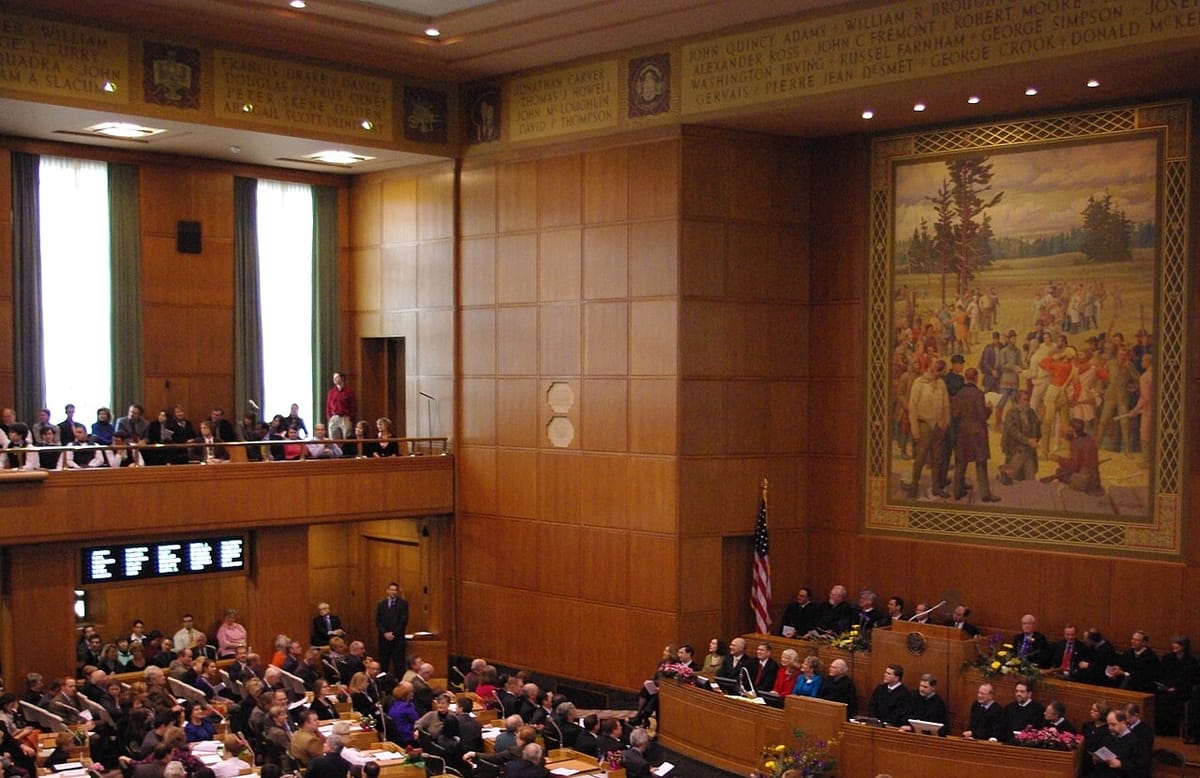
A bill pre-filed in the Oregon legislature would allow the governor to hold back money owed to the federal government if federal funds appropriated to Oregon are withheld by the US government in "contravention of a valid court order." The measure, whose primary sponsor is Rep Willy Chotzen (D-Portland), does not apply to state employees' payroll taxes and provides protection to state officials from civil penalties. The bill also sets up an escrow account to hold the funds.
Washington progressive Democrats have also introduced a bill, SB 6218, that would hold back payments to the feds if they refuse to pay funds appropriated to the state in retaliation for a "valid Washington state law." Presumably, this is in response to threats by Trump to withhold funds to sanctuary states that prevent local law enforcement from cooperating with immigration raids. The Washington bill does allow withholding payments of "federal taxes owed by the state as an employer," which, according to an email sent by Sen Jamie Pedersen to a constituent this week, has prompted a veto threat from governor Ferguson, who is worried members of his administration could face criminal penalties if the bill becomes law.

Chotzen says his bill differs from one filed in the Washington Senate in that it specifically exempts payroll taxes, and is thus less ambitious by design. His hope is that this will make it easier to pass and have a better chance of standing up to a court challenge.
My bill doesn't focus on what is going through the President's brain.
"'I'm introducing this bill, both out of concern for the way in which federal dollars are not flowing into our communities here in Oregon – federal dollars that come from the federal taxes all of us are paying," Chotzen said, "and also as a lawyer, out of concern for the rule of law."
The bill requires that a court has determined the federal government has illegally held back funds to the state. Chotzen noted that Trump has already tried to withhold some $4.6 billion in funds to the state, but courts have ruled all of those actions illegal so far. "I want to make sure that we are prepared for the possibility that I hope never comes," he said. "That when we continue to win in court, but the President makes a different choice, and willfully chooses not to follow a court order."
"My bill doesn't focus on what is going through the President's brain. It focuses on what is the lawfulness or unlawfulness of that action, and has a federal court already found the President's actions to be unlawful?" Chotzen said.
He noted that the sorts of payments that might be kept from the feds could be unused portions of federal grants, regular payments to the Department of Justice or the Food and Drug Administration, and other non-tax money Oregon owes to the US government. He estimates the total would be in the range of "tens of millions of dollars" each year. Chotzen is aware this might not be equal to Trump's attempted cuts, but it would still send a message.
"I absolutely agree that I took a little bit more of a cautious approach. I'm supportive of the ideas that underscore the Washington bill," he said.
"But I thought there wasn't much value in Oregon being the eighth or ninth state to propose the same idea if we couldn't pass it."
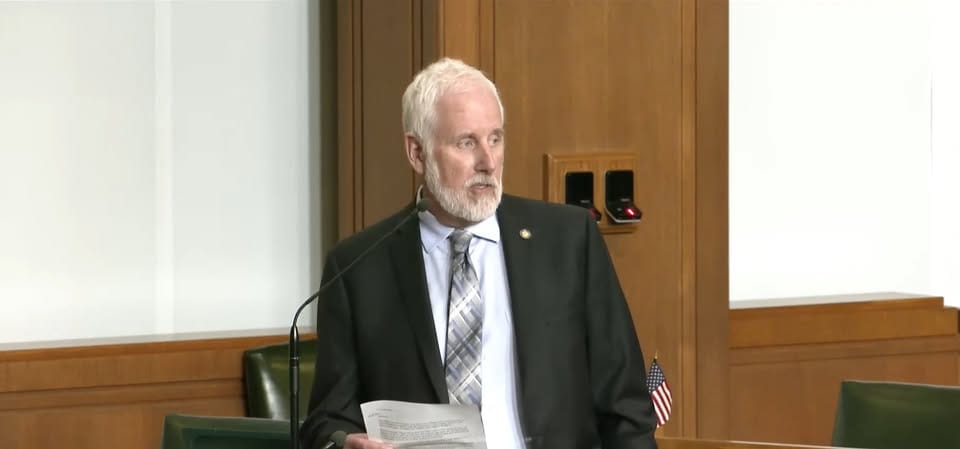
In another effort to regain funds in Oregon hit by changes at the federal level, Rep. Mark Gamba (D-Milwaukee) is sponsoring a bill that would disentangle Oregon's state income tax from the federal tax code. The state's income tax levels are directly tied to the federal tax code, so after last year's federal tax cuts to the wealthy and corporations, the Oregon state budget stands to lose about $700 million each year.
Gamba's bill aims to disconnect Oregon's tax code from the feds. "There's the shortfall that that creates – that connection to the federal tax code creates in our general fund budget," he said. "Which means that we're going to be cutting programs or education in the budget somewhere around $700 million. The more we disconnect from the federal government, the fewer cuts there will have to be."
Gamba notes that Oregon is one of six states that automatically conform their tax code when changes are made at the federal level. "I would characterize it as lazy, and I will be advocating over the next few years that we establish our own tax code and disconnect it permanently from the federal code."
Meanwhile, Chotzen says more than half of his Democratic colleagues have already signed on to his withholding bill. The Oregon legislature's 35-day session starts Feb. 2 and runs through March 8.
Do you appreciate Cascadia Journal's exclusive reporting on the ways the Pacific Northwest is pushing back against US fascism? If you have the means, please consider a paid subscription of just $5 per month. Each subscription helps me produce original reporting and opinionated notes on Cascadia's fight to build a more resilient and autonomous bioregion. And to those who already subscribe, thank you! --Andrew