Poetry is essential to the Cascadia movement
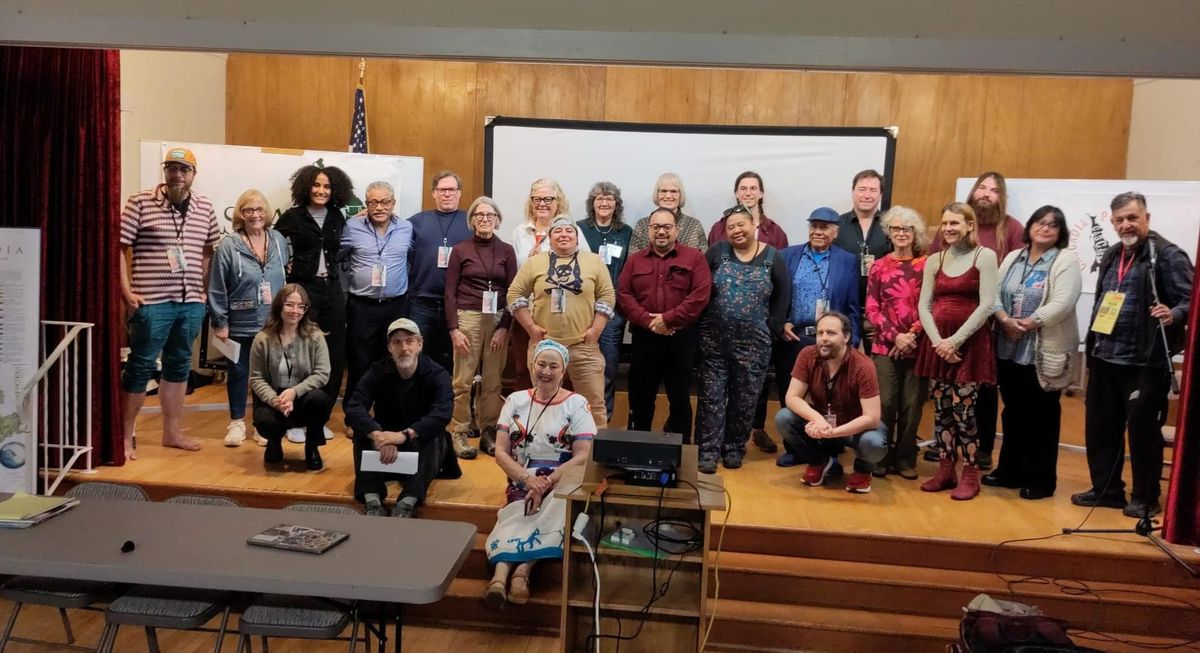
Recently, I was able to drop in on the annual Cascadia Poetry Festival, held this year in the Rainier Beach neighborhood of south Seattle. This was the tenth edition of the festival, which is organized by the Cascadia Poetics Lab. It's an event filled with a spirit of inquiry, good humor, and love.
It's a festival of readings, workshops, and social events all rooted in the place we call Cascadia. Though not all the poems are about Douglas-fir trees, chinook salmon, and orcas, the poetry and the programming are deeply immersed in the bioregional idea: that humans would do better to organize our societies around common landscapes, river valleys, and mountain ranges rather than arbitrary borders.
This is deeply multi-cultural and multi-ethnic event. One reading I attended was from a new bilingual anthology in Spanish and English called Somos Ajolotes, (We Are Axolotls). The Latinx/Chicanx poets who read included José Juan Gómez Becerra and Gabriella Gutiérrez Y Muhs. It was a moment of quiet, passionate resistance to the current political climate. In her poem, "Distrust" from the collection, Gutiérrez Y Muhs writes:
"We are not the colonial
ancestors of hate.
We have walked on coals,
ridden the train of deaths,
the rails, pulled by mules,
into cenotes of creativity…
Americans say we are,
our hands tied by consumerism and debt:
we know our ancestors did not possess it"
Sadly, at another reading during the festival, I learned that only one poet from British Columbia crossed the border to attend and read this year. The fascists have spread fear and animosity in a way that hinders even collaboration and fellowship among writers across that invisible, imaginary border.
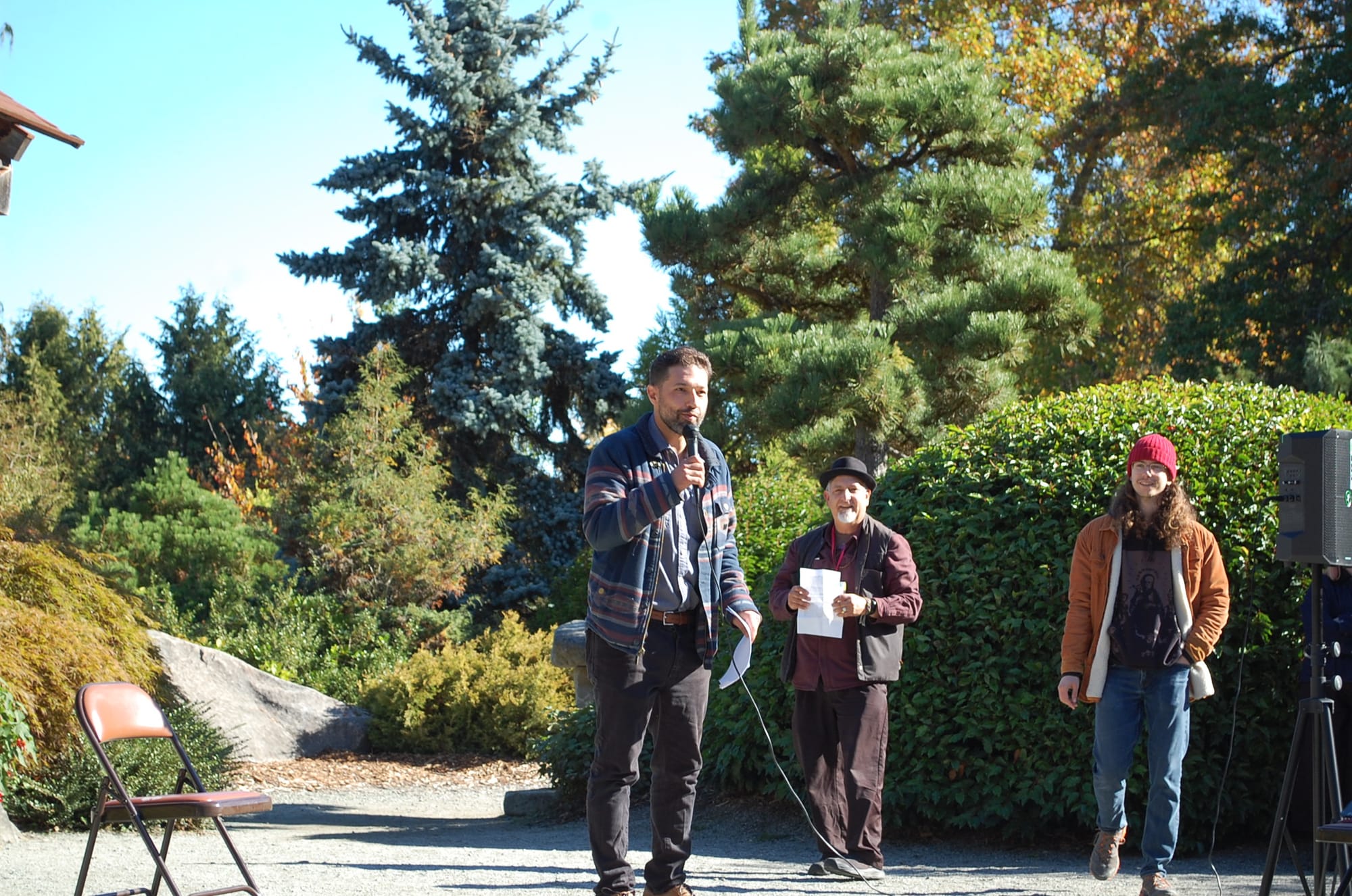
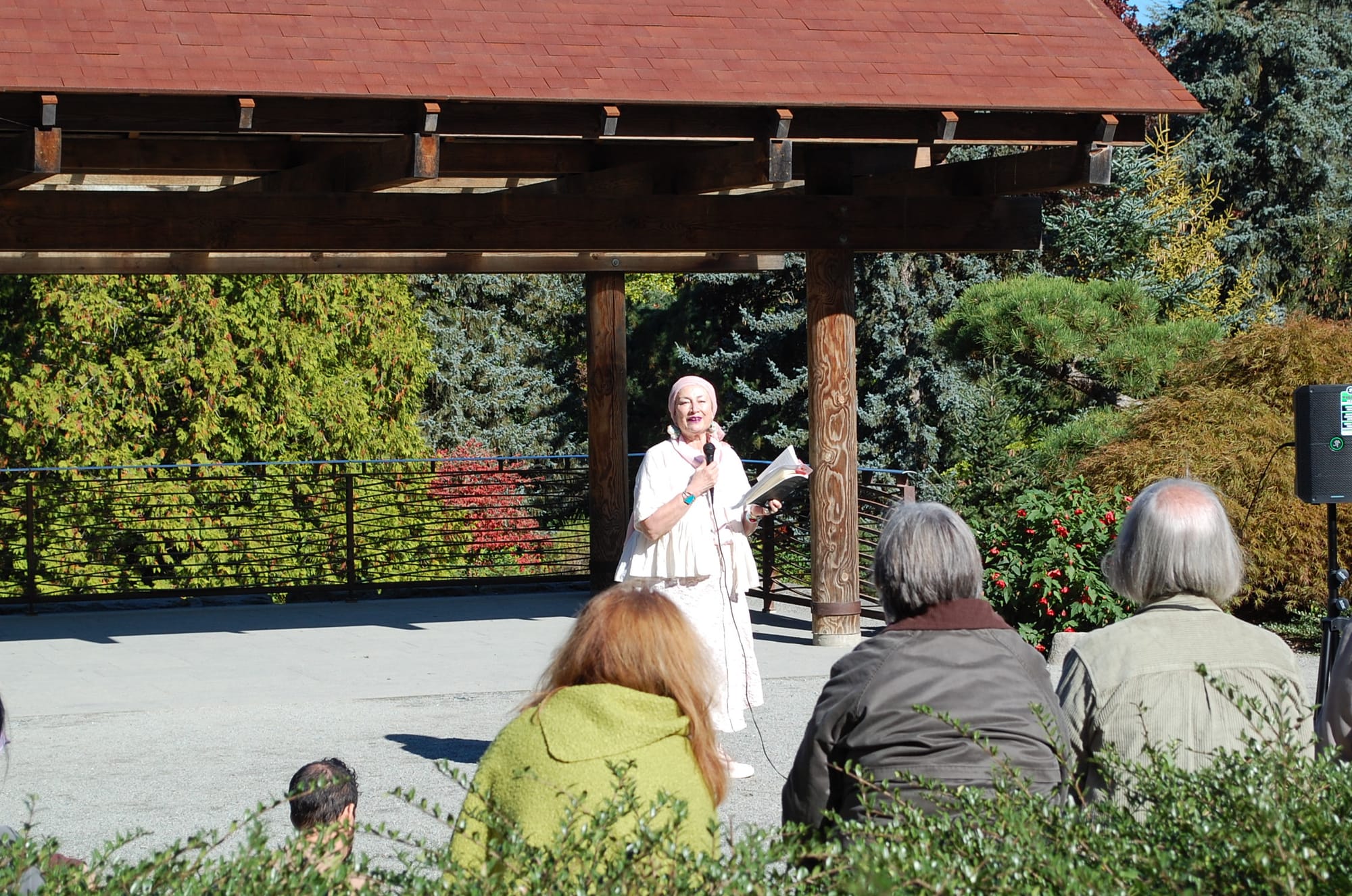
A reading on Sunday at Kubota Garden – a delightful traditional Japanese garden that had on its finest autumn colors for the occasion – also included Gutiérrez Y Muhs, who read poems with an operatic passion. Alex Gallo Brown, a longtime Seattle poet and labor organizer who ran Katie Wilson's successful campaign for mayor, read from a new collection of poems about the small joys of parenting. Katie Wilson was there as well, sitting on the grass with her daughter. It's refreshing to see elected officials recognizing and celebrating the importance of the arts in our communities.
One of the grande dames of Cascadia poetry, Tess Gallagher, read from her latest work in a lilting Irish accent. Ankober Yewandwossen read with deep emotion and gratitude from poems that told of her journey through difficult relationships and finding an authentic spiritual self as the child of immigrants.
Poetry has the power to express the depths of our experience with honesty and vulnerability. It's the antidote to the AI-generated slop and fake kitsch that authoritarians love because fake art ignores the reality of lived experience. Poetry is inherently an act of resistance – because even when it tells lies or fables, when it exaggerates or makes shit up, or takes linguistic somersaults through the imagination – even then, poetry is born from what it is to be alive. It's the first step in acknowledging what needs to change and what needs protecting.
It's why I've started a monthly poetry series known as Subduction in a collaboration between Cascadia Democratic Action and Cascadia Poetics Lab. Poetry is the ground in which seeds of revolutionary change can begin to grow. Our next event, at 7 pm, Wednesday, November 4 at Vermillion in Seattle, will include poets featured in a new anthology of resistance writing, Winter in America (Still published by Carbonation Press.
As we work to assert Cascadia's unique culture and build a movement for autonomy, poetry is a critical ingredient. It helps us imagine a new world, a new way of defining ourselves that resist old notions. As Maria Melendez Kelson wrote in her poem "ICE Agents Storm My Porch," she envisions an imagined center
where walls
between all beings
are dreamt to dissolve.
Thanks for reading. Have a great weekend. Keep loving, and keep fighting. --Andy
Do you appreciate Cascadia Journal's exclusive reporting on the ways the Pacific Northwest is pushing back against US fascism? If you have the means, please consider a paid subscription of just $5 per month. Each subscription helps me produce original reporting and opinionated notes on Cascadia's fight to build a more resilient and autonomous bioregion. And to those who already subscribe, thank you! --Andrew