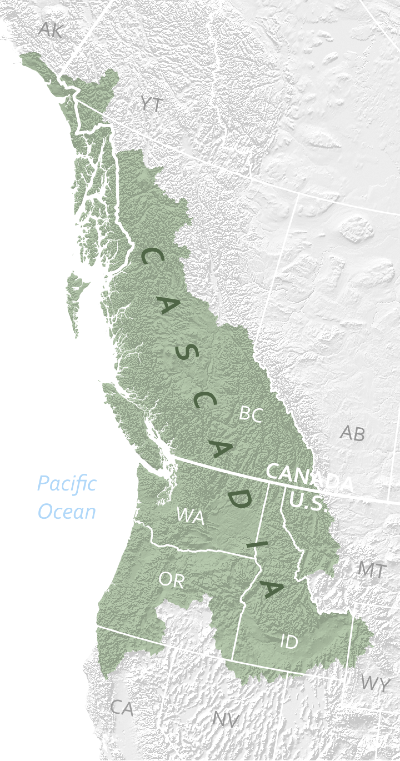
The state of the Cascadia bioregion

The day after the US emperor gave his annual speech full of lies, I thought it might be good time to review the state of the Cascadia bioregion.
The Cascadia bioregion is strong, but it is also under threat.
The combined economic output of Oregon, Washington and British Columbia is just under $1.5 trillion US dollars, equal to the GDP of the Netherlands or Indonesia. Washington and Oregon were in the top seven US states in terms of per capita GDP growth between 1997 and 2024. Oregon and Washington's combined international trade economy totals more than $92 billion. Our unemployment rate is about 5 percent.
Around six and a half percent of Washington residents don't have health insurance, while five percent in Oregon are without it – better than the overall US rate of 8%. Oregon last year reached a record high school graduation rate of 83 percent, an impressive improvement over a 69 percent rate in 2013. Our region's universities and research institutions highly regarded, with the University of Washington recently ranked as the 8th best university in the world.
Local transit in the Seattle area saw a 12% increase in use in recent years. Portland and Seattle were recently ranked the fourth and sixth most-bike friendly cities in the US.
But these gains in the Pacific Northwest are at risk from two threats: climate change and the Trump administration.
Warming global temperatures caused by human-generated greenhouse gases led to record low snowpack across Cascadia. Wildfires hit our region hard last year, especially in British Columbia, where 886,000 hectares burned. In the fall, rains and flooding hammered our region, with more than $182 million in damage in Washington.
But the most dire threat to the people and environment of Cascadia is Donald J. Trump.
Following the implementation of the right-wing Project 2025 the Trump administration has slashed funds for our health care, preschools, education, and food assistance. In addition, the feds have illegally attempted to claw back billions of dollars of appropriated funds from our region, including $1.1 billion in clean energy grants and more than $1 billion in scientific research funds. The Oregon attorney general's office estimates its lawsuits against the administration have prevented $4.6 billion of illegal funding cuts.
Every year, Oregon and Washington together pay $37 billion more in federal taxes than they receive back in funds and services. In addition, Trump's unconstitutional tariffs have hit the trade-dependent economies of Cascadia hard. Governor Bob Ferguson's office estimates Trump's tariffs could cost Washington state's economy $2.2 billion over the next four years. Thankfully, a lawsuit led by Oregon attorney general Dan Rayfield against those tariffs was successful in the US supreme court.
Trump hopes to resume clear-cut logging on 2.5 million acres in Oregon. He tossed aside a plan negotiated with tribes to restore salmon runs in the Columbia and Snake Rivers. And Republicans in Congress attempted to sell off millions of acres of forest that belong to the people of Cascadia.
Meanwhile, the Trump administration ramped up its cruel mass deportation efforts in Portland and tried nationalize the Oregon national guard against Cascadia's residents. But after a wave of peaceful protests that included inflatable frog costumes, Trump was defeated in the courts and eventually pulled out.
Today, residents from Newport Oregon to Tukwila, Washington are saying NO to new ICE facilities. Legislatures in both states have proposed bills that would withhold money owed to the feds and ban ICE goons from hiding their identities. We've led loud protests from Bellingham to Boise. Cascadians have created mutual aid networks to help immigrants and our most vulnerable neighbors. Teachers in Hillsboro organized ICE watch patrols outside their schools.
And now, some of our residents are realizing that if things continue to get worse under the Trump regime, Cascadia would do better to peacefully separate from the United States. We're in a bullying, abusive relationship in which our partner threatens us, insults us, and has stolen our credit card and uses it to wastefully spend our money on fancy fighter jets and gilded ballrooms.
It's time for a divorce.
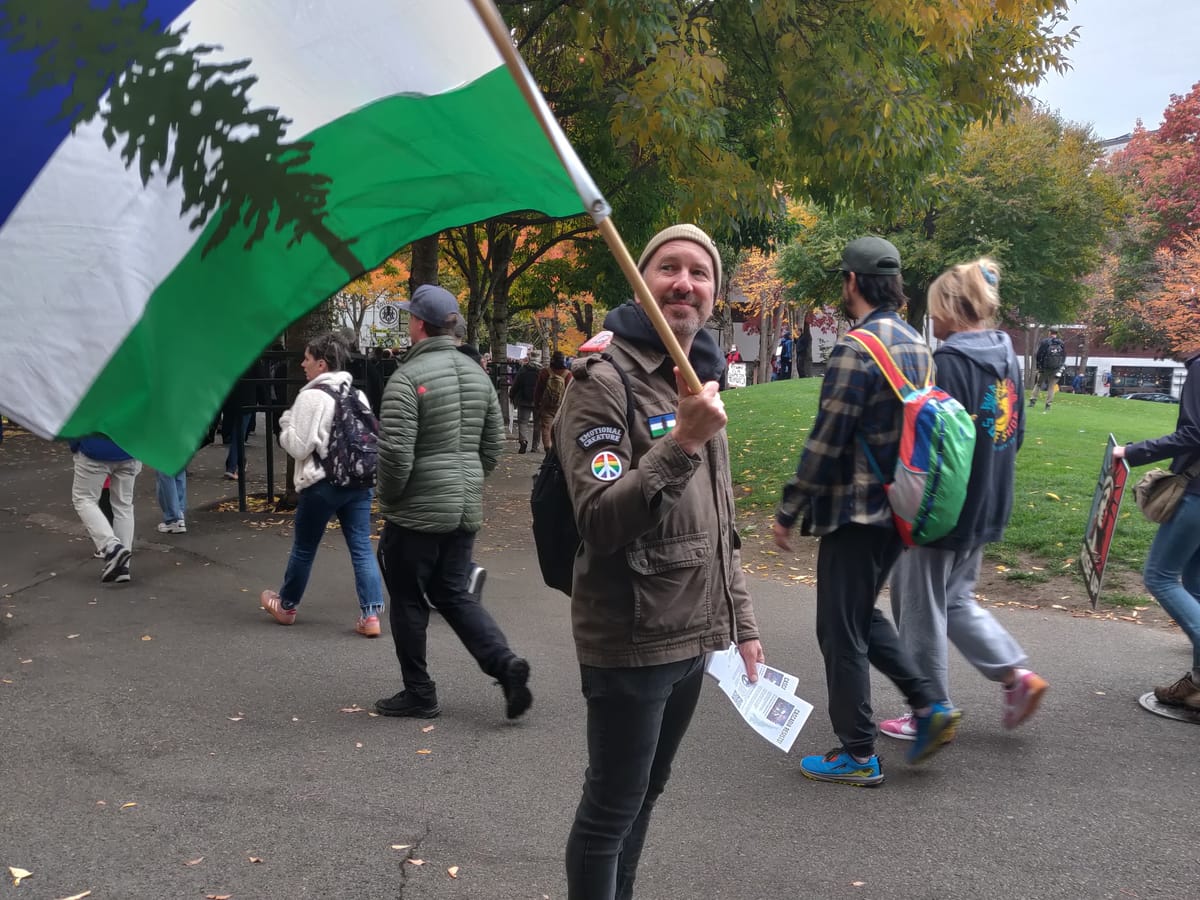
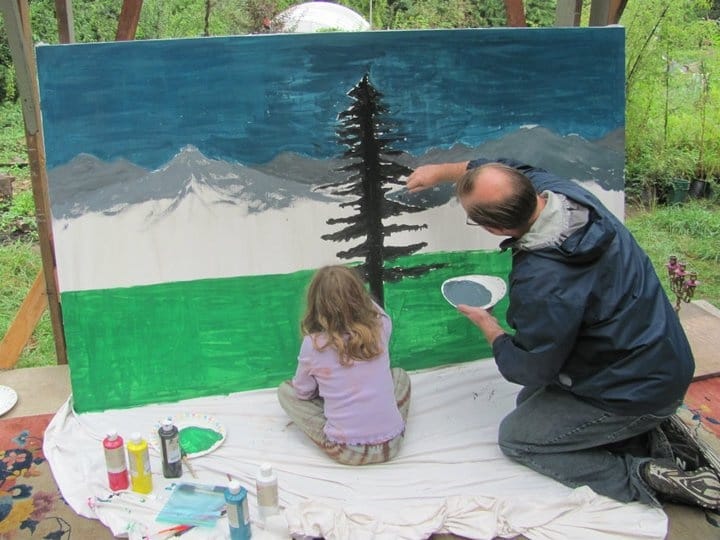
It won't be easy. But we already have a name and a vision: Cascadia. We have a flag, and shared common culture. A poll in February found that 25% of Washington residents and 21% of Oregon residents already want to secede from the US. Washington governor Bob Ferguson spoke openly late last year about the Cascadia region during a conference on high-speed rail and regional cooperation.
If Trump isn't removed from office, and respect for the constitution isn't restored, then Oregon and Washington should vote on a ballot referendum regarding separation in the 2028 general election.
Together, Cascadia's residents can defy fascism. In the coming year, we'll continue to speak up for human rights, fiscal independence, and protecting the Pacific Northwest's environment. We can become more autonomous and more resilient.
Here in the Pacific Northwest, we can actually have good things. If we tax the immense wealth in our region and begin to disconnect from the United States, we can have universal health care, paid college education, reliable transit, and affordable housing. We can create a sustainable energy system that addresses climate change. We can give more decision-making power to Cascadia's Indigenous nations. And we can defend the human rights of all Cascadia's residents.
That's the state of our bioregion now. Keep loving and keep fighting.
Andrew Engelson