
Will Ferguson get away with raiding cap & trade funds?

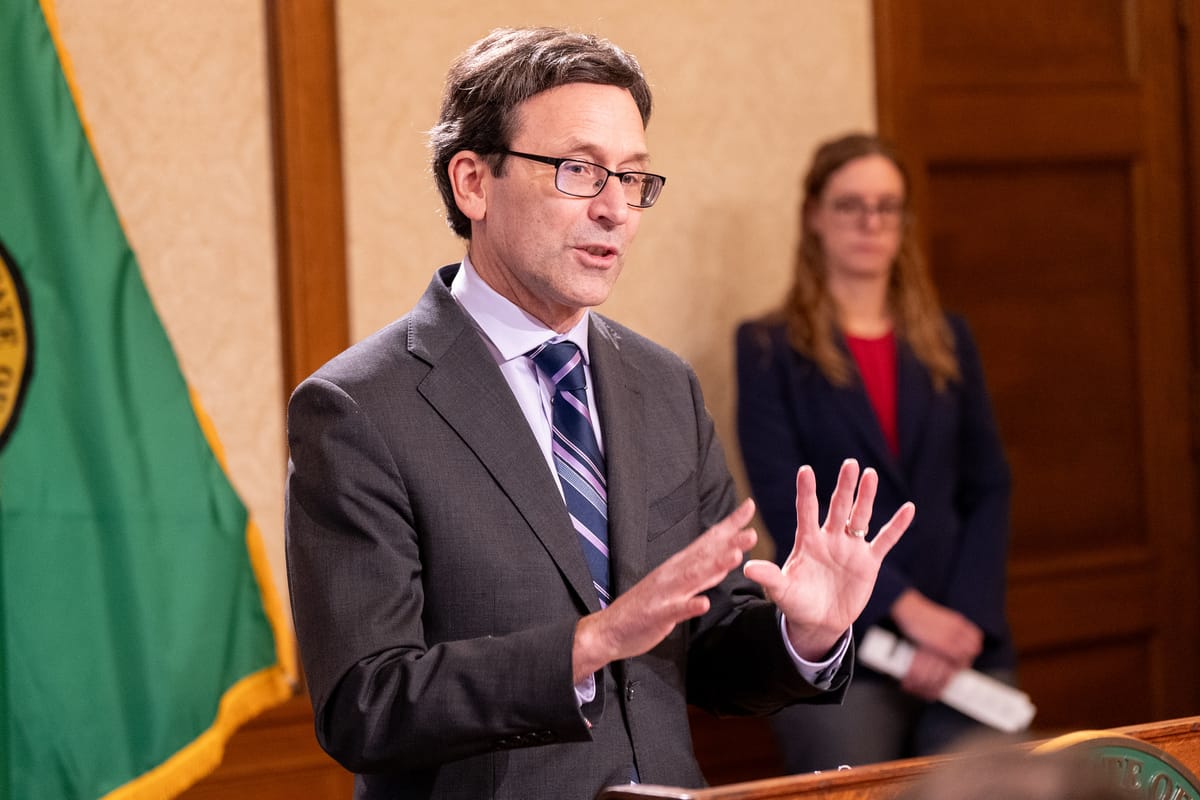
Washington may balance its state budget by sacrificing the health and safety of lower income people if governor Bob Ferguson has his way.
The Washington legislature is now in session, and by mid-February it needs to decide how to balance the state budget and address an estimated $2.3 billion shortfall. Unfortunately, governor Bob Ferguson, who last year passed an austerity budget that cut services and failed to reform taxes, is suggesting that he can pass another austerity budget and not raise taxes.
To his credit, he did propose a wealth tax on those earning more than $1 million a year – but it won't go into effect until 2029.
Instead, the conservative Democrat this year is proposing to cut services, tap into the state's rainy day fund, and raid $569 million in revenue from the state's cap-and-trade Climate Commitment Act. Ferguson says this climate revenue should be used to fund the Working Families tax credit, a crucial program that assists low income people who struggle to pay their bills.
But Guillermo Rogel Jr, political manager for the environmental justice organization Front and Centered, says Ferguson's plan will harm the health and safety of low income people and communities of color in Washington.
"We lobbied for the Working Families tax credit," Rogel said, "we think it's a good program to help return cash to low income residents."

But Rogel says that Front and Centered also helped push the Climate Commitment Act and defend it from repeal. He notes that Democrats "promised that these funds would go to mitigate the causes of climate change, help us reduce pollution, and help us wean off of fossil fuels."
If you appreciate this original reporting from Cascadia Journal, please consider becoming a paid subscriber. Your contribution of $5 a month helps me continue to cover issues important to Oregon and Washington. Thanks!
Shifting these fees on polluters – which were higher than projected – threatens home weatherization assistance, clean energy projects, and other programs that help communities become more resilient in the face of climate change, Rogel said.
"Our concern is that these sorts of sorts of transfers tend to become permanent," he said.
In addition, the feds last year cancelled $1.1 billion in clean energy contracts in Washington, making the carbon tax revue critically important to filling that gap.
"We've seen that clean energy projects are just going to be costing a lot more," Rogel said. "Rate payers are going to be the ones bearing that burden. And that makes it more difficult for Washington to transition off fossil fuels."

James Hove, Washington director of the organization Climate Solutions, said in a post on the organization's website, "It’s absolutely critical that Climate Commitment Act funds continue to go to the purposes that the program was created for: reducing climate pollution, expanding affordable clean energy and energy efficiency, and strengthening communities in the face of rising climate impacts."
Rogel said that Front and Centered instead supports reforming Washington's regressive tax code and favors measures like Rep. Shaun Scott's Well Washington Fund proposal, which would generate $2 billion each year by creating a wealth tax on large corporations for each employee earning more than $125,000 per year.
“Washington is one of the wealthiest states in the wealthiest nation in human history," Scott said in a press release. "The idea that we ‘can’t afford’ childcare, transit, or housing is absurd. We can afford all of it – when the corporations and ultra-wealthy who have benefited the most contribute what they owe.”