In case of emergency, break glass
As the Trump regime continues to become more authoritarian, Cascadia needs to consider two bold resistance strategies: soft secession and a general strike.

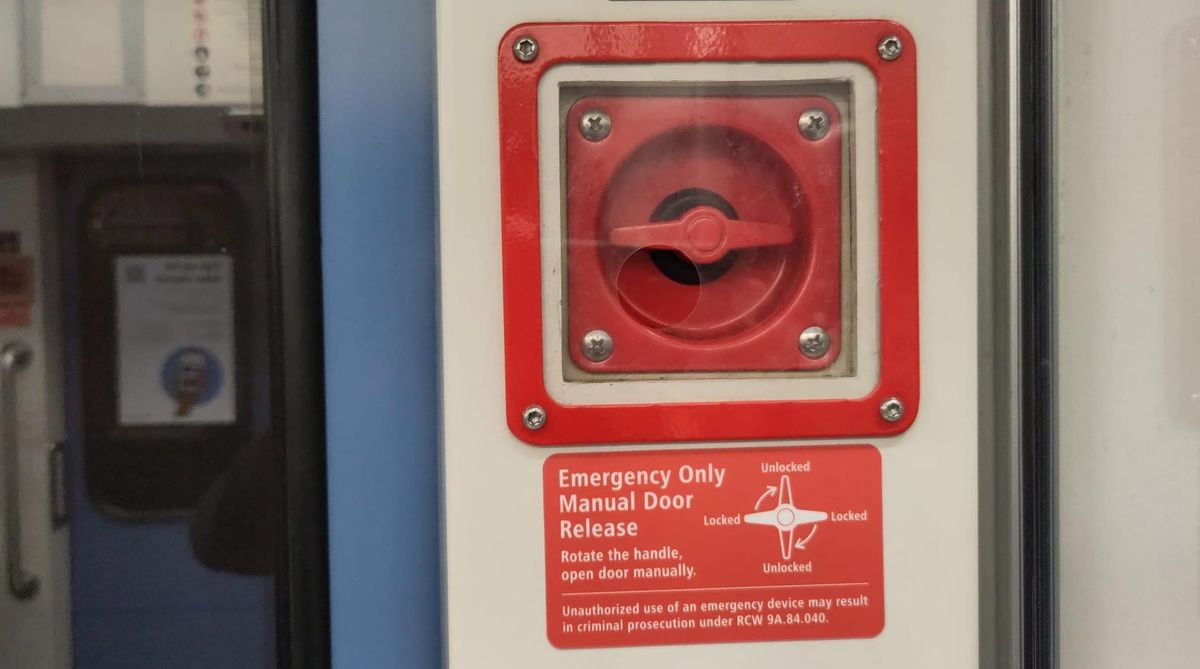
One of the volunteers I work with at Cascadia Democratic Action once described a referendum on secession as an "in case of emergency, break glass" scenario. With federal agents yesterday raiding and searching the home of US rep Ilhan Omar of Minnesota, a Somali-born immigrant and vocal critic of Donald Trump, it sure looks like we're in an authoritarian emergency now.
Take your pick: harassing investigations meant to intimidate political opponents. Attempting to undermine vote-by-mail in the midterm elections. Withholding appropriated funds from blue-voting states, including Oregon and Washington. Sending armed goons roaming our streets to terrorize and kidnap our immigrant neighbors without warrants.
We're in an emergency. And a referendum on separation is going to take at least several years. In the meantime, Cascadia should take bolder steps in its resistance to US fascism. It's time to break the glass and stop the train.
There are two strategies that will prove useful if we're going to get serious about Cascadia resistance in the second half of Trump's term: soft secession and a general strike.
"When government and corporations are aligned in crushing our rights, only widespread economic disruption will stop them."
--Paul Birkeland, SeattleStrike.org
Soft secession, as I've written about before, involves efforts to assert state and local autonomy in resistance to federal overreach. This means taking risks and making political decisions that serve our residents, regardless of whether courts may or may not allow them.
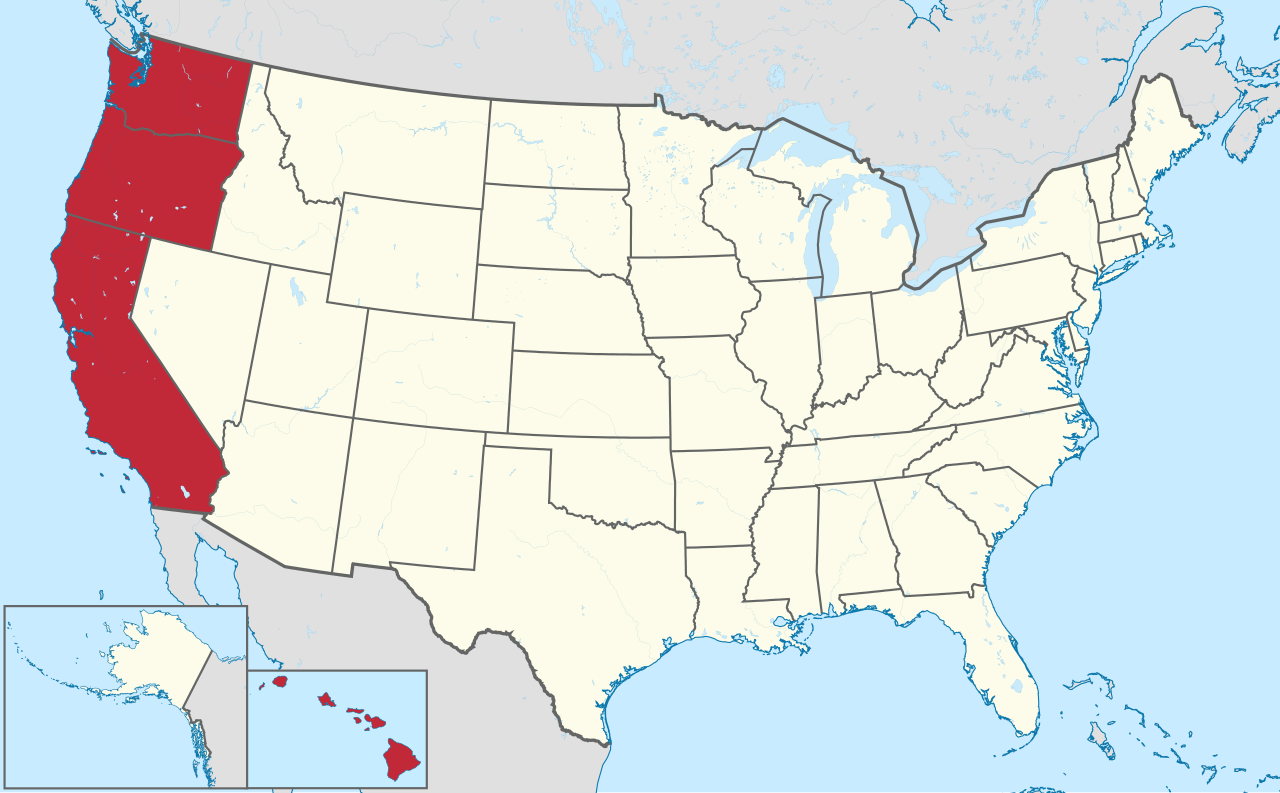
That includes setting up alternatives to federal systems, such as the West Coast Health Alliance, which issues guidance on vaccines and public health based on science, rather than the politicized Centers for Disease Control under RFK Jr.
It means passing state bills that withhold money owed to the federal government (including federal income taxes) in response to Trump's holding back of funds to blue states. It can include setting strict limits on federal agents and vigorously prosecuting them when they break those laws. It means asserting authority over privately owned ICE detention centers like as the Northwest Detention Center. It means creating public state banks. It means taking actions that are politically effective regardless of whether courts uphold them.
Christopher Armitage, writing for the Existentialist Republic, says of soft secession, a concept he first publicized:
Soft secession moves one direction, towards refusal and non-cooperation. A state builds something on its own authority and its own revenue to make a self sufficient safety net, or maybe withholds its officers from federal tasks it disagrees with, and leaves the federal government to react.
I'll be in conversation with Christopher, as well as Indigenous queer poet Nadine Maestas about soft secession, Cascadia autonomy, and Indigenous sovereignty at 7 pm Wednesday, October 14 at Folio Seattle in Pike Place Market:

In addition, we're going to need a general strike to pressure the federal government to end its authoritarian tactics.
Seattle is making great progress on this. This past weekend, SeattleStrike.org had it kickoff planning meeting at the University Friends Meeting in Seattle's U-District. The venue was full and nearly 200 people attended, including those participating via Zoom.
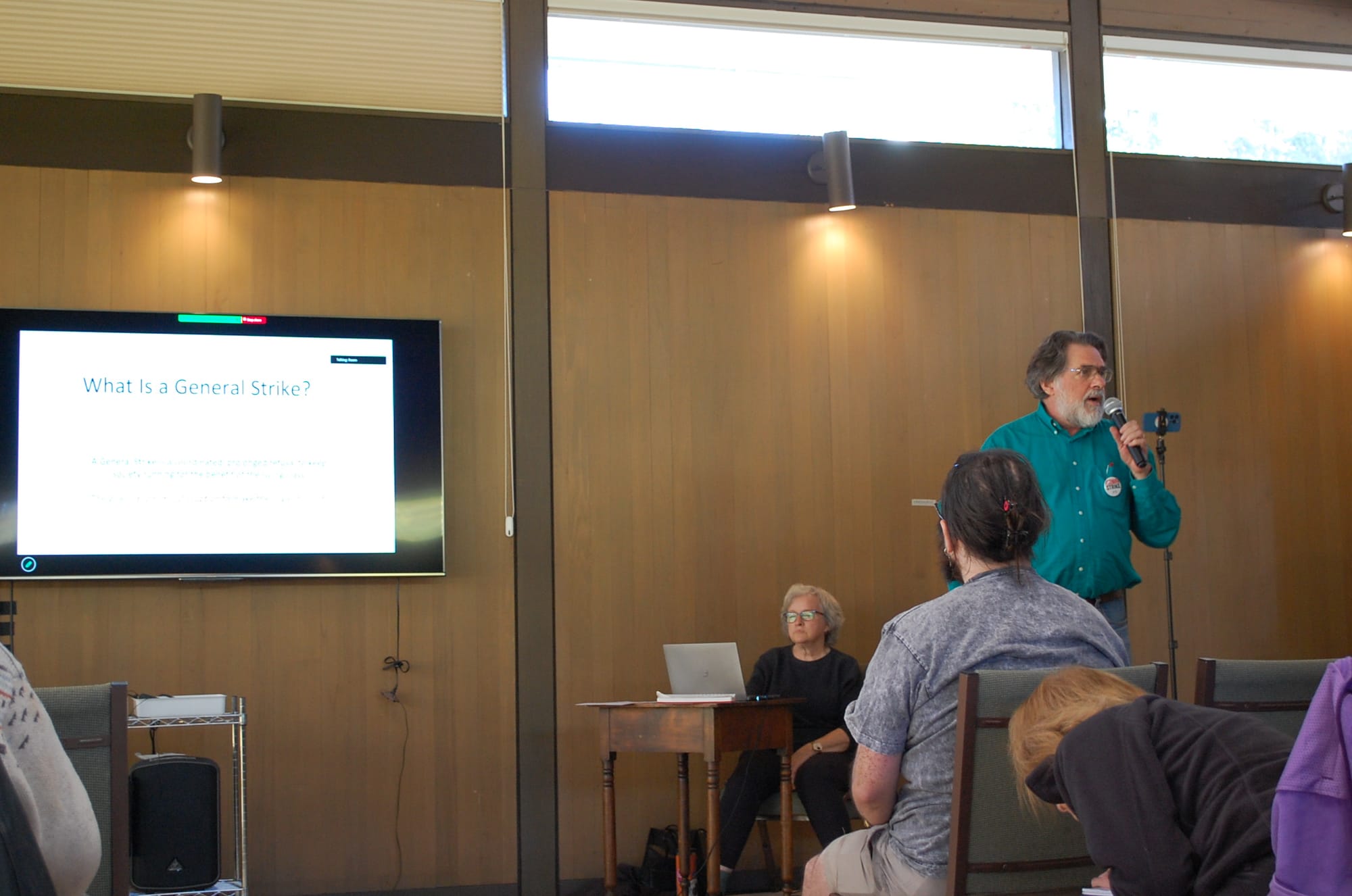
Seattle Strike, which is centered on building a movement through personal connections rather than simply organizing online, has already helped inspire similar general strike groups across the US, including in New York, Philadelphia, Portland, and Atlanta. The strategy is to have groups operating in the ten largest metro areas in the country based on gross domestic product (GDP).
Seattle Strike's presentation made it clear that a general strike doesn't simply involve everyone leaving work for a few days. It involves a prolonged refusal to keep society running, through rolling strikes, consumer boycotts, rent and loan payment strikes, and mutual aid networks that keep people fed and assist them with medical and other expenses.
Paul Birkeland, one of the organizers behind Seattle Strike, said that a general strike should be in our tool kit if elections don't end authoritarianism in the US. "When government and corporations are aligned in crushing our rights, only widespread economic disruption will stop them," Birkeland said. "That’s what a general strike is about, economic disruption. Vote to be heard, march to be seen, and strike when the other two don’t work anymore.”
Advance planning is critical Birkeland says, because you don't know what the inciting incident will be that motivates large numbers of people to take action.
“We cannot schedule a general strike," he said. "It will be sparked by some egregious, and likely tragic, action by the government. But we can prepare for that event so that there is a coordinated way in every community to channel the outrage into economic disruption when it is sparked.”
While mass protest like No Kings have helped energize people, a general strike is a step beyond, requiring more buy-in. Seattle Strike's presentation made it clear there's a role for everyone, whether it's walking off your job, slowing down at work, or helping cook meals or donate to rent payment funds. And even if a strike doesn't stop the fascists, the effort helps build needed community.
"But if we don't get there, haven't we helped form more resilient communities that can weather the coming storm better, more humanely?" Birkeland said. "Haven't we reinforced the bonds between people and communities so that they are more likely to care for each other? Haven't we acted on the dream that, even if we aren't ready when the time comes, our action inspires the next generation, the next attempt? Is that not success?"
Though we're working on different end games, the Cascadia movement and Seattle Strike do seek a similar goal: the end of US fascism. We'll both be working in tandem to build resiliency and be ready for the moment when we make the demand that authoritarianism has to end. Any movement toward independence will also require similar solidarity and care for one another.
To sign up to help organize with the Seattle General Strike, visit this site.


Thanks for reading. Keep loving and keep fighting. --Andy
Do you appreciate Cascadia Journal's exclusive reporting on the ways the Pacific Northwest is pushing back against US fascism? If you have the means, please consider a paid subscription of $5 or $10 per month. Each subscription helps me produce original reporting and opinionated notes on Cascadia's fight to build a more resilient and autonomous bioregion. And to those who already subscribe, thank you!