So, Cascadia. We need to talk about Alberta.
So how does a progressive movement for Cascadia independence respond to the Alberta separatist movement, which has put a non-binding secession measure up for a vote on Oct 19?


Good afternoon. It's Cascadia Journal's fall fund drive, so I'd like to suggest that if you appreciate Cascadia Journal, consider getting a paid subscription. I put out this newsletter thanks to my subscribers, and that's as simple as giving $5 or $10 per month. I'm trying to add thirty new paid subscribers by the end of October. Will you become one?
A subscription at the $10 level also guarantees in future you'll have the option to become an annual member of Cascadia Democratic Action, supporting that organization's grassroots efforts to increase autonomy for Oregon and Washington. So, if you haven't already, please take a moment to support Cascadia Journal's regional articles, feisty opinions, and daily news digest. None of this is AI generated. It's just good, old-fashioned writing by a cranky, recovering journalist.
Thanks!
Do you appreciate Cascadia Journal's exclusive reporting on the ways the Pacific Northwest is pushing back against US fascism? If you have the means, please consider a paid subscription of just $5 per month. Each subscription helps me produce original reporting and opinionated notes on Cascadia's fight to build a more resilient and autonomous bioregion. And to those who already subscribe, thank you! --Andrew
So, I've intentionally avoided writing about Alberta for a while. As a Cascadia separatist, I believe our bioregion would be better served by leaving the United States and its inadequate political system. The US has failed, for the most part, to prevent the rise of an authoritarian government.
Plus, the US constitution has for decades failed to allow for the election of leaders who support the kinds of progressive policies that people in Oregon and Washington (and actually, most of the US) want: universal health care, good K-12 schools, paid college tuition, subsidized childcare, and a robust social safety net. Instead, our region pays $51 billion in federal taxes that never return to us in funding or services. Instead, our hard earned tax dollars are wasted on a bloated military, a cruel mass deportation campaign, and a lavish presidential ballroom.
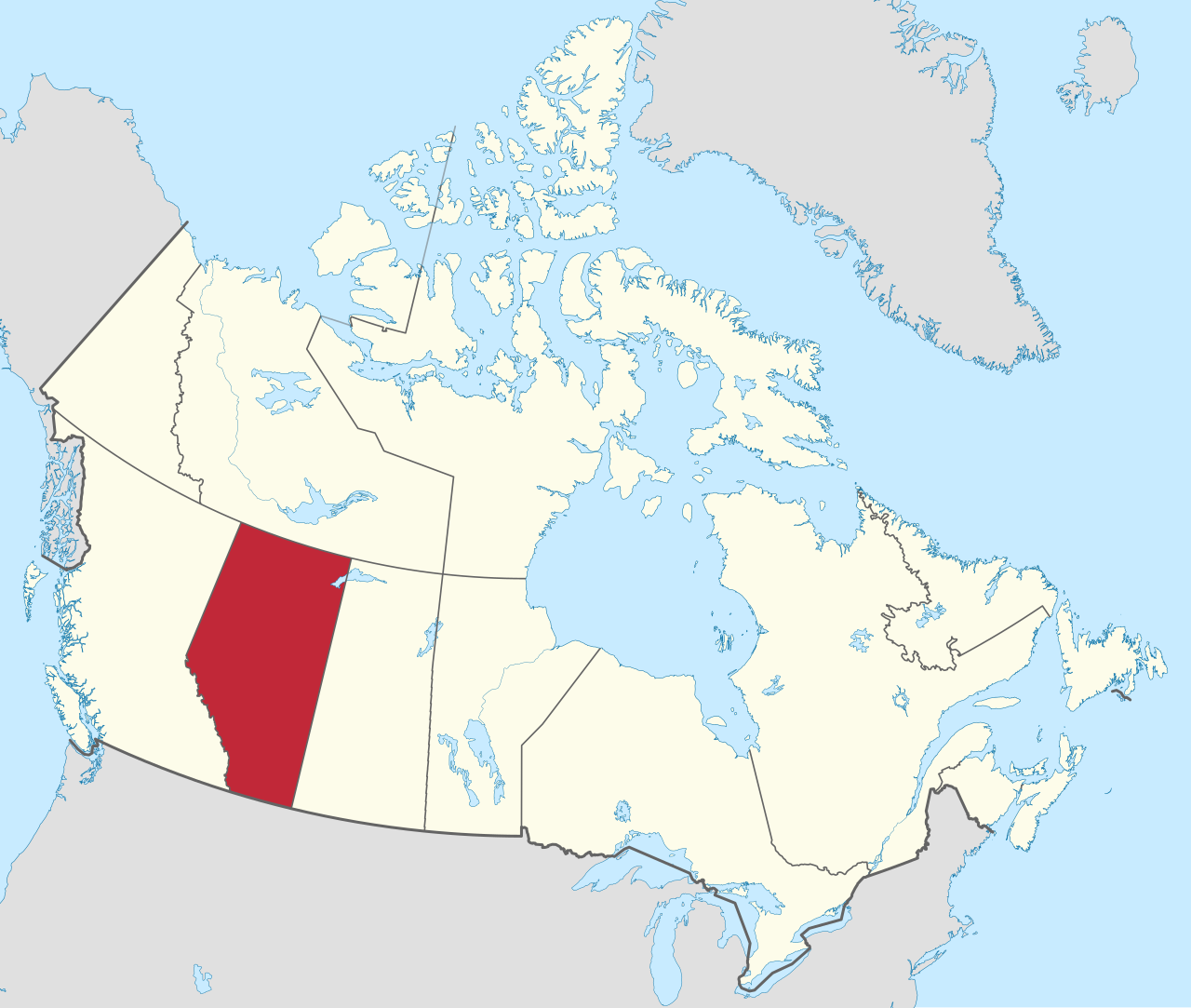
So how does a progressive movement for Cascadia independence respond to the Alberta separatist movement, which has put a non-binding secession measure up for a vote on Oct 19?
Let me be clear. The movement for Alberta independence is a right-wing MAGA-style effort that's mostly popular among white, conservative men. Alberta separatists feel aggrieved about progressive politics and social change in Canada. A paper released by the Alberta Prosperity Project (APP), which organized the signature gathering effort that put the measure on the ballot, envisions a new country that favors individual rights over "social" rights. You can guess what that means: more guns, much lower taxes, and an inadequate social safety net.
And, according to a recent article at the Tyee, it turns out Alberta's separatist movement has been generously funded by libertarian think tanks based in the United States. Plus, US government officials in January secretly met with leaders of the Alberta Prosperity Project (APP), the group behind the current referendum. This is not a grassroots movement, but one that has been stoked by cynical conservative outsiders with a lot of money.

Regardless, the APP pressured Alberta's premier, Danielle Smith, and her conservative government, to support putting the measure on the ballot. The referendum is a non-binding referendum that asks if Alberta residents want to stay in Canada, or, if instead:
The Government of Alberta should commence the legal process required under the Canadian Constitution to hold a binding provincial referendum on whether or not Alberta should separate from Canada.
It's an odd referendum that essentially asks Albertans if they want to have a real separation referendum some time in the future.
Complicating matters, the leaders of the separatist movement, as well as the Canadian government, failed to consult with Alberta's First Nations on the implications of the measure. That failure resulted an Alberta court ruling quashing the referendum. But the vote is still going forward and Alberta premier Danielle Smith has vowed to appeal the ruling.
The court ruled that moving forward with the referendum without consultation violates First Nations' right to consultation. The ruling noted that any change in Canadian sovereignty in Alberta could have serious impacts on treaties signed between Indigenous nations in what is now Alberta and the Canadian government.
It's worth noting that the Cascadia movement for autonomy (unlike its Alberta counterpart) takes Indigenous rights and the future of treaties seriously. Any steps toward independence must guarantee existing treaty rights and in fact expand rights and increase consultation with Indigenous nations.
 Andrew Engelson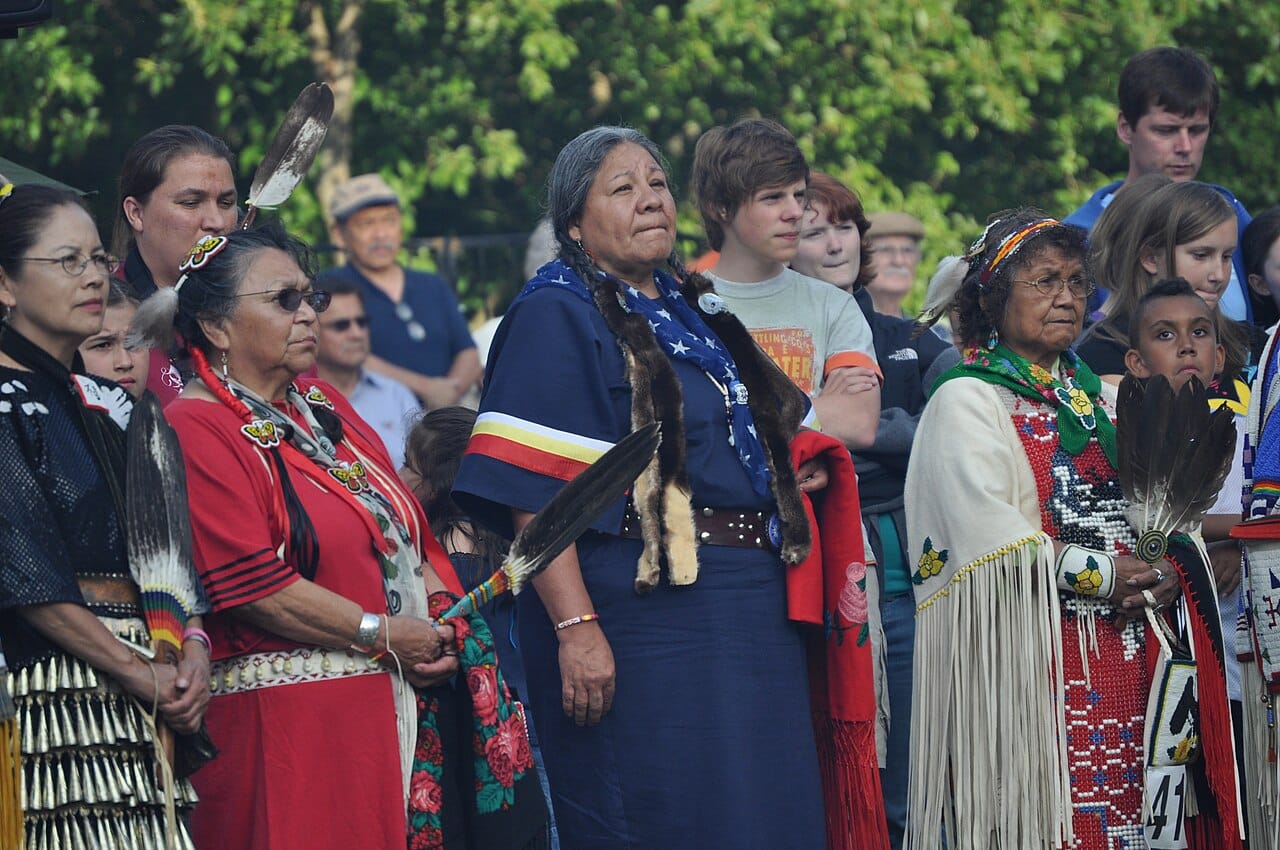
For more on the history of the Alberta secession movement, and its relation to the longstanding Quebec separatist movement, I'd recommend a great article, How Alberta’s Separatist Movement Could Shake North America, at the Walrus.

The Alberta secession measure, for all its radical implications for Canada, North America, and perhaps the Cascadia movement, is not polling well. According to CBC, a recent poll by Janet Brown Opinion Research found that only 23 percent of Alberta voters support a vote for independence, down from 27 percent in a similar poll in April.
Canadian patriotism is at an all-time high right now. And that's due to one thing: Donald J. Trump. The US president has been on a bizarre, angry vendetta against Canada. He's suggested it should be a 51st state. He's engaged in a stupid and relentless trade war on Canada, placing 50% tariffs on many Canadian products. Trump recently bloviated that Canada is one of the "worst countries in the entire world."
So it's no wonder that even in Alberta, the most conservative of Canada's provinces, pro-Canada sentiment against the US and its delusional president is running high.
But for one moment, let's disregard Trump's tantrums. Are there deeper roots to Alberta's dissatisfaction with the government in Ottawa?
Though Alberta's independence movement isn't as deeply culturally rooted as the Scottish independence movement, they do share one thing in common. Oil resources and the wealth generated by petroleum are key factors in the movement.
In response to the oil crisis of 1980, the Canadian government under Pierre Trudeau and the Liberal Party passed the National Energy Program, a series of price controls and tax measures that effectively transferred $100 billion CDN from Alberta's economy to Ottawa. It was deeply resented by western provinces and sparked strong antipathy to the Canadian federal government.
The conservative province closely watched two independence votes in Quebec. The majority-French speaking province has had a longstanding and robust separatist movement. Quebec took votes on leaving Canada twice: in 1980 and 1995. The 1980 measure failed 59% to 40% and the 1995 measure narrowly lost, 50% to 49%. Though both measures failed, a deep fracture still exists in Canadian society.
Indeed, the separatist Parti Québécois is polling well and is likely to secure a majority in upcoming provincial elections next week.
Pressure has been building in Alberta over the past decade, finding vent in a MAGA-style independence movement that's about social issues and taxation.

Canadian Prime Minister Mark Carney, who rode to victory running on a platform of Canadian patriotism and resistance to Trump, has been very aware of the threat to Canadian unity simmering in Alberta. That's why he announced a new climate-killing oil pipeline between Alberta and the British Columbia, claiming it will create 175,000 jobs in what's sometimes known as the "Texas of Canada."
Do I support the right-wing Alberta separatist movement or the idea of the province joining the US? Absolutely not.
But – I am aware that the referendum points to deeper divisions within both the US and Canada that could eventually lead to the breakup of both nations. Even if Alberta's referendum fails, it should cause us in the Cascadia bioregion to think hard about what may be on the horizon and to prepare for it.
My readers know that I support increased autonomy for Oregon and Washington – whether that means soft secession measures like withholding federal taxes, or more bold steps like outright separation. It's a progressive movement frustrated with the US failing to prevent growing authoritarianism, but also the misuse of our tax dollars and the treating of our region as a revenue-generating colony.
I'd like to speak for a moment to my dear neighbors in British Columbia, especially those who consider themselves progressives and environmentalists.
I completely understand your passion and enthusiasm for Canada right now.
We both have a common enemy: Donald Trump and the right-wing white nationalist party that put him in power.
But also. If Quebec – or especially Alberta – leave Canada, it may suddenly require British Columbia to consider its options. If BC is left physically separated from most of Canada, does it make sense to remain? If Alberta does the worst thing imaginable and joins the US, what will it mean for BC be surrounded on two sides by a newly hostile border?
Many progressive British Columbians have long been enthusiastic supporters of bioregionalism and fascinated with the idea of a united Cascadia. And there are still some who believe British Columbia has more in common with Oregon and Washington than with Ottawa and Toronto. They've generally stayed quiet, understandably, in this climate of passionate Canadian nationalism in response to Trump.
I stand in solidarity with people in BC who are frustrated with the US government. If you've read this newsletter, you know that I'm also passionately opposed, to the degree that I think it's best Oregon and Washington leave the failing nation known as the United States.
I get it, British Columbia. Trump is a moron and an ass. But if Alberta suddenly leaves, what's your plan? You'd be more than welcome to join us as part of Cascadia. Or also, to remain in Canada and help us repair the damage Trump has caused to our relationship here in the Pacific Northwest.
I'm firmly opposed to the Alberta separatist movement. But I also think it can't be ignored and may eventually drive Oregon, Washington, and British Columbia even closer together.
Thanks for reading. Keep loving and keep fighting. --Andy
Do you appreciate Cascadia Journal's exclusive reporting on the ways the Pacific Northwest is pushing back against US fascism? If you have the means, please consider a paid subscription of just $5 per month. Each subscription helps me produce original reporting and opinionated notes on Cascadia's fight to build a more resilient and autonomous bioregion. And to those who already subscribe, thank you! --Andrew